Category: Marketing Shenanigans

  • Automating Post-Delivery Feedback

    Automating Post-Delivery Feedback

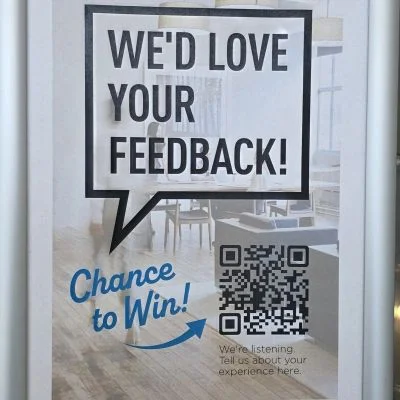
    A poster asking for feedback in exchange for a chance to win.

    If you’ve ever ordered something online, received a service, or had a contractor finish a job, you’ve probably gotten one of those follow-up emails asking, “How did we do?” Sometimes they’re seamless. Sometimes they’re a forgotten afterthought sent three weeks later when you’ve already moved on emotionally.

    Here’s the thing: collecting feedback after delivery isn’t just a nice-to-have. It’s one of the highest-ROI touchpoints in your entire customer journey — and most businesses either skip it entirely or do it so badly that it might as well not exist.

    Let’s break down why this matters, and more importantly, how you can automate it without a developer on retainer.

    The Feedback Gap Is Real (And Expensive)

    Think about the last time you had a genuinely bad experience with a product or service. Did the company ever ask you about it? Did you proactively reach out?

    Probably not. And that’s the problem.

    Research consistently shows that for every customer who complains, roughly 26 others stay silent — and then quietly churn, leave a Google review six months later, or just tell their friends. The companies that close this gap aren’t doing anything magical. They’re just asking at the right time, in the right way.

    The “right time” matters more than most people realize. Feedback collected within 24–48 hours of delivery is dramatically more accurate and actionable than a survey sent a week later. Memory fades. Emotions settle. The window for capturing authentic sentiment is surprisingly short.

    Why Most Feedback Processes Fail?

    Here’s what typically happens in most small-to-mid-sized businesses:

    1. Product ships or service completes
    2. Someone intends to follow up
    3. Life happens
    4. Nothing gets sent — or it goes out two weeks later with a generic “Hope you loved it!”

    The fix isn’t hiring someone to manually send emails. The fix is removing humans from the trigger entirely.

    Enter the Automated Feedback Form.

    This is where it gets practical. Here’s a real-world example of how a simple automation loop works:

    Scenario: You run a home cleaning service. A cleaner finishes a job at 2pm on a Tuesday.

    With a basic automation setup (think: Zapier + Google Forms, or a tool like Typeform connected to your CRM), here’s what happens automatically:

    2:00 PM — Job marked “complete” in your scheduling software

    2:30 PM — Automation triggers, sends a personalized email or SMS to the client

    2:31 PM — Client opens their phone and sees: “Hi Sarah, thanks for having us today! We’d love 60 seconds of your feedback.”

    2:35 PM — Sarah fills out a 4-question form while the experience is fresh

    2:36 PM — You receive a notification. If she rated anything below a 3, a separate alert flags it for immediate follow-up.

    That entire sequence? Built once, runs forever.

    What the Form Actually Looks Like?

    Here’s an example of a post-delivery feedback form that hits the right balance — short enough to complete, specific enough to be useful:

    How did we do today?
    Takes about 60 seconds

    1. Overall, how satisfied were you with today’s service? ⭐⭐⭐⭐⭐ (1–5 stars)

    2. Was everything completed to your expectations? ○ Yes, everything looked great ○ Most things were good, minor issues ○ There were some problems I’d like to flag

    3. How likely are you to book with us again? (Scale of 1–10)

    4. Anything specific we should know? [Open text field — optional]

    [Submit Feedback →]

    Simple. Four questions. No login required. No essay prompts. This is the format that actually gets completed.

    The open text field is optional — and that’s intentional. You want volume on the structured questions, and you let the detailed comments come from people who are genuinely motivated to share them. Those tend to be your most passionate customers in both directions.

    (You can also create a longer form as needed, add dynamic structure, and customize it based on the customer’s responses. Longer forms are out of scope for this Blog.)

    The Automation Stack (Without the Tech Headache)

    You don’t need a custom-built software platform. A lean version of this works with tools most businesses already have access to:

    • Form: Google Forms, Typeform, or Tally (free tiers cover most small businesses)
    • Trigger: Zapier or Make (formerly Integromat) connects your job management or e-commerce tool to the form delivery
    • Delivery: Gmail, Mailchimp, or SMS via Twilio
    • Alerts: Slack or email notification when a low score comes in

    The whole setup can take an afternoon to configure. Once it’s live, you’re collecting structured data on every single delivery without lifting a finger. 
    Not everyone will fill out the form, but a significant portion of the customer base will.

    Many companies have started offering incentives such as gift cards, discount coupons, a chance to win a huge prize, etc. Generally, these are companies with robust Marketing departments. It doesn’t have to be. Using the above stack, anyone can implement a robust feedback system.

    What to Actually Do With the Data?

    Collecting feedback without acting on it is arguably worse than not collecting it at all — because now you know about problems you’re ignoring.

    A few habits worth building:

    • Weekly review of aggregate scores. Watch for trends, not individual data points. 
    • Immediate response protocol for scores below a threshold. A quick “We’re sorry to hear that — can we make it right?” message sent within the hour can dramatically change outcomes.
    • Quarterly analysis of open-text responses. Read them. Themes will emerge that your quantitative scores don’t capture.
    • Use 5-star responses as social proof fuel. With permission, these become testimonials, case studies, or review site content.
    • Survey Outlier: Keeping an eye on outliers also helps. Sometimes that is where your next service/product improvement comes from.
    • Keeping an eye on the NPS score can also tell us about overall business health.

    NPS Score: Net Promoter Score (NPS) or Customer Net Promoter Score (cNPS) is a market research metric that is based on a single survey question asking respondents to rate the likelihood that they would recommend a company, product, or service to a friend or colleague. (source)

    The Bigger Picture.

    What Starbucks figured out with their seasonal cups, great service businesses figure out with feedback loops: consistent, well-timed touchpoints compound over time. One feedback form doesn’t transform your business. A thousand of them, analyzed thoughtfully over 12 months, absolutely can.

    The automation removes the friction. The form removes the ambiguity. What’s left is just a steady stream of real customer signal — the kind that tells you what’s working before your competitors figure it out.

    The businesses that listen systematically beat the ones that listen occasionally. And right now, the bar for “systematic” is honestly pretty low. A form, a trigger, and 30 minutes of setup are enough to put you ahead of most.

    So the question isn’t really whether to automate your feedback collection. It’s why you haven’t yet. Would you like to? We help people automate marketing, fill out on this page and get started.

  • The Best Out-of-Home Ads in Cleveland – Misny makes them Pay.

    The Best Out-of-Home Ads in Cleveland – Misny makes them Pay.

    Keep An Eye Out For Motorcycles - roadside sign with Tim Misny's eye raise.

    If you live in Cleveland, you cannot get away from Tim Misny, and if you are not from Cleveland, you have no Idea what I am talking about. I lived and worked in Cleveland, so I am definitely aware of his presence there. I also know he also runs ads in Akron and other areas too.

    Quick introduction: Tim is a Personal Injury lawyer from the suburbs of Cleveland. Here is his Wikipedia if interested  Wiki Page

    Is he the most famous lawyer in the Cleveland area? I think so. Is he Iconic, I asked Chat GPT what it means to be iconic, and here is what it said:

    “Something becomes iconic when it rises above being ordinary and becomes a widely recognized symbol with lasting impact.”

    Is Tim a Cleveland Icon? Yes, he is.

    Last year, I met a lady who worked for the State Attorney General’s office. Her daughter, who was in middle school, came home and asked her where she works. She replied: Ohio’s highest lawyer’s office. The daughter responded Oh you mean Tim Misny?

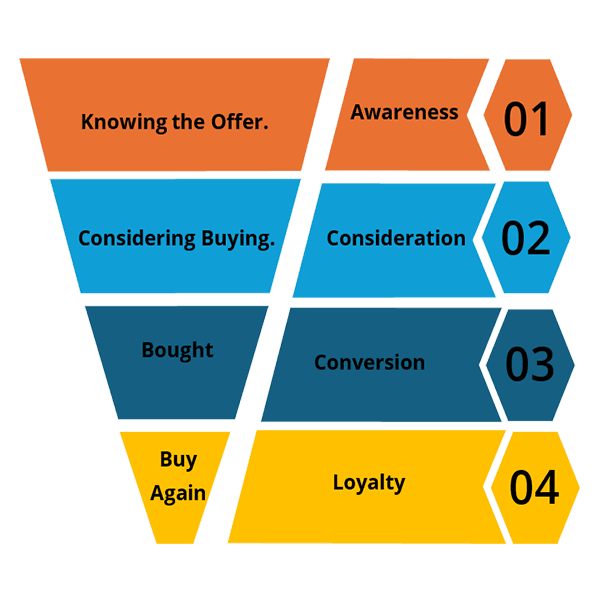
    Every year Tim runs multiple Out-Of-home ads. Whoever does the campaign understands the TOP of Funnel (TOFU) marketing. Let me explain in the marketing funnel (my post) at the very top; we have awareness. Top-of-funnel ads are emotion-based ads and generally don’t have a CTA (call to action). Think of Nike showing athletes in their ads and not actually asking to buy shoes or anything else. They are just building awareness, and the sales come as the awareness goes up, so if you are an athlete or aspiring athlete (who doesn’t have six-pack abs, right :), you associate Nike with sports. And if the ad has your favorite athlete in it, you will strongly prefer Nike.

    Why is that even important for marketing?
    Fair question: The 95/5 rule, at any given time 95% of the people are not in the market to buy whatever you are selling. So, if you run an awareness campaign, they will keep you at the top of their minds when it’s time to decide to buy. The best thing that can happen to any brand is to have it as an option when people are about to make a purchase.

    I have been taught that when a customer makes a buying decision, they only use two brain cells for it, and how we decide is whatever comes 1st to your mind is what we buy or at least we would try them. So, seeing Tim’s face plastered over billboards has become iconic for Cleveland.

    The campaign basically checks all the right marketing boxes for a Top of the Funnel campaign for Tim:

    Positioning – Tim Misny will make them pay.

    Most Billboards no longer mention what Misny does.

    Christmas Billboard from Tim Misny that reads ALL I WANT FOR CHRISTMAS IS YOU TO BE SAFE!

    Against what? Medical Errors? Bad Accidents?

    As an observer, your brain will make the connection, since you have seen the Billboard 100’s of time

    Check this Reddit thread and check the few top comments, you will see the above statement in action – Reddit Thread.

    The campaign brilliantly builds the brand. Misny had a personal brand before most people knew what a personal brand was.

    In the ever-increasing digital marketing era, this is one of the campaigns that I have seen and probably done wonders for Tim Misny. He has also done some TV ads, but I have not seen the ad on TV. I saw it on YouTube. Here is a 15-second ad, which was based on a real story.

    Will I ever need his service? I hope not. But if I ever need a personal injury lawyer, I know he is there.

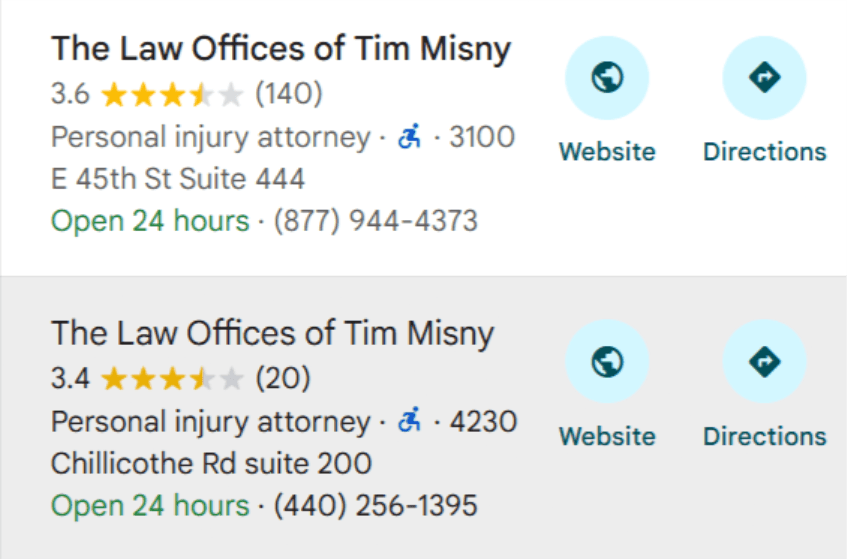
    Screenshot of Google business profile of Tim Misny's office with one office being 3.6 stars and 2nd being 3.4 stars

    I would also like to mention that his online reviews are not the best. I found two profiles on Google maps with 3.6- and 3.4-star ratings. Seems like he is very selective with his cases and wouldn’t take just any case. As always, marketing aside, we need to do our due diligence before buying into any brand, especially in the times when the stakes are high, and you need a lawyer for anything.

  • Marketing Funnel 101: What is a Marketing Funnel?

    Marketing Funnel 101: What is a Marketing Funnel?

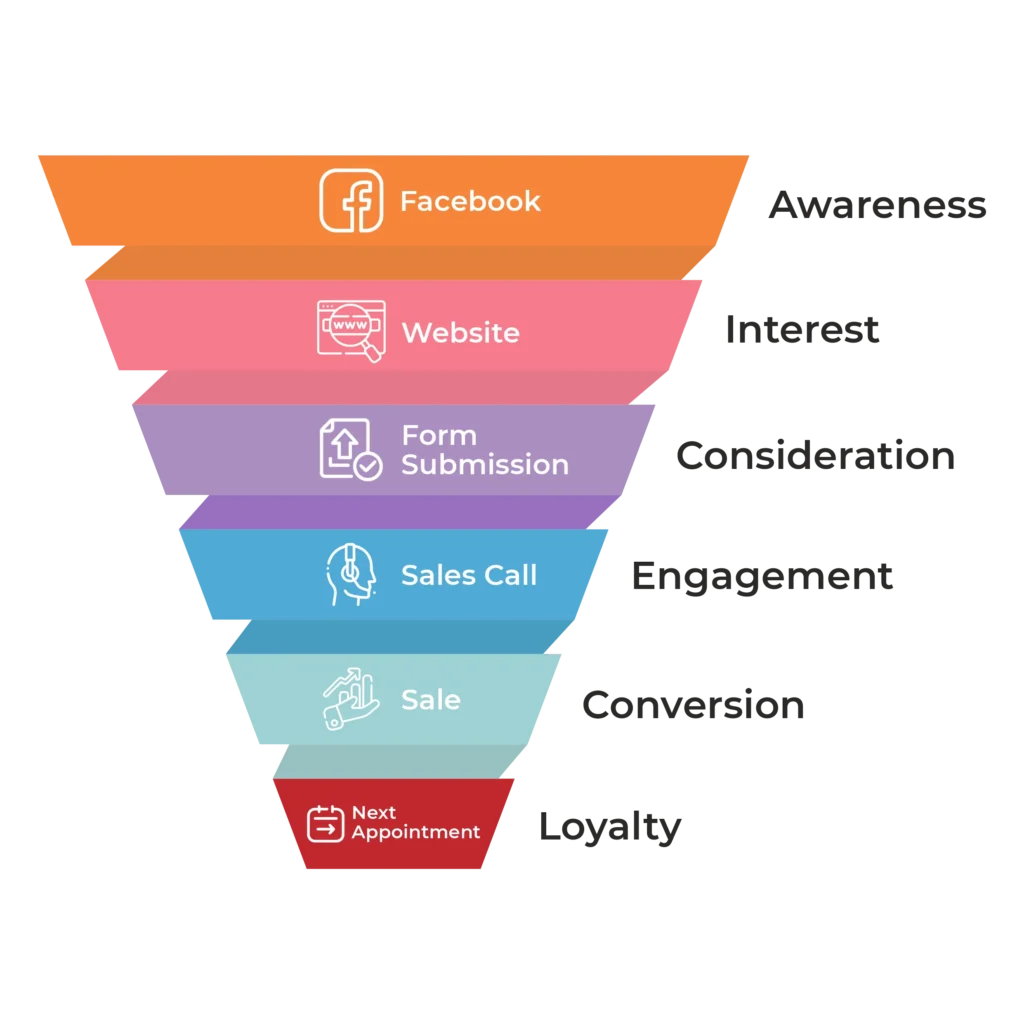
    Simply put, it is the customer’s marketing journey from discovering what you offer to buying and becoming a loyal customer.

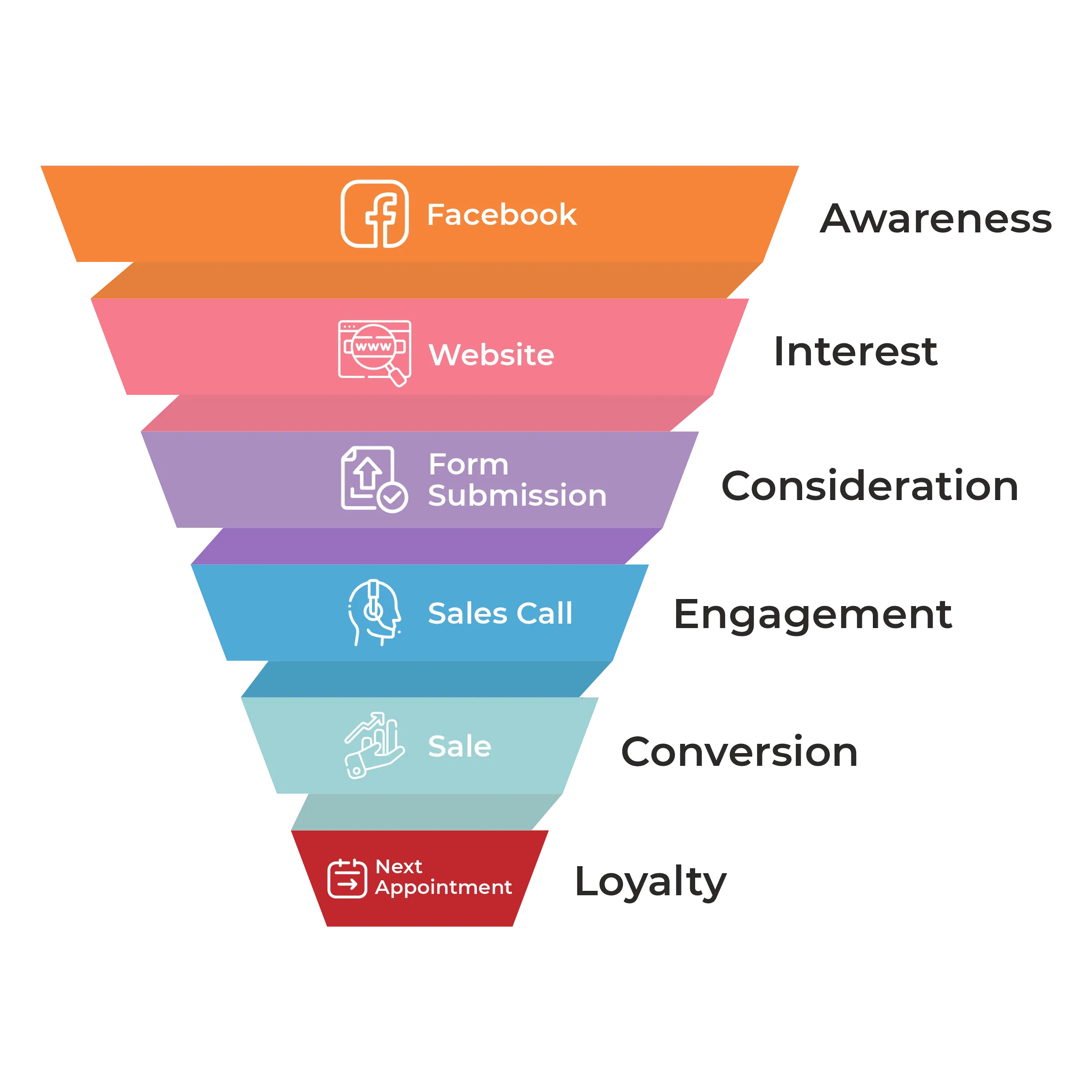
    The above funnel is generic, and most people need to use it to create their own custom funnel. So, let’s say you are a local cleaning company. You post daily on local Facebook groups. You also have a website.  
    From the group, someone checks your posts and clicks on the website link inside the post. Now that they are directed to your website, they check your services and contact you through the contact form. You call them and give them a quote. They accept the quote, and you schedule the service for next week. On the day, your employee goes and renders the service and collects the payment. They also schedule another cleaning service for next month. So, how would your funnel look? 


    Facebook Funnel to Website to form to sales to next appointment

    As you can see, I added two new stages to our new funnel vs the original generic funnel. Funnels are just guidelines; we need to customize them to fit our needs. At every stage, we lose customers.  
    Let’s say we have 100 people who saw the offer. But only 20 people clicked it, and of those, only 10 visited your website and filled out the form. You quoted all 10, but only eight people bought and became customers.    

    You can do the quick calculations and find out what your conversion percentage is from one stage to another. 
    If you have everything in place and are correctly collecting the data, the funnel will talk to you. It’s Magical. Let me explain, let us assume we have 100% conversion from awareness to consideration. You have a few problems: 1. You are probably underpriced. 2. You don’t have enough awareness. 3. You have maxed out your market. 

    Another example: If you have an issue between the Consideration and conversion part of the funnel. You might need to troubleshoot and run tests to identify what can be improved to fix the problem.  

    This all falls into your marketing strategy, and a funnel will not work correctly if you have not done your segmentation. Why, you ask? Think if your customers are divided into two segments, for example, homeowners and business owners, the funnel will be different for both the segments. So, before we do Funnel we need to do the Segmentation before doing a marketing funnel. 

    Amaninder Singh

  • Illogical solution to logical problem.

    Illogical solution to logical problem.

    I hope I am not the only one baffled by the recent meeting between USA President Donald Trump and Ukraine’s President Volodymyr Zelenskyy.

    I am not an expert in foreign relations, but I understand sales a bit. One thing for sure is that you research your prospects before approaching them.

    From what I have seen in the news, the offer on the table was to share 50% of the profits from the Mineral, and it seems pretty good, but that is for the government to decide. Here is the problem with the deal: Mr. Trump does not care about the facts. How did I conclude?

    If you search for any topic prevalent during his first term as President, you will find article after article written on it.

    So, how do you work with someone who follows conventional logic? Any sales conversion that ends up in an aggressive shouting match is not suitable for either side, and in this case, our president didn’t care what happened since he is already more towards Russia than Ukraine. The unfortunate reality is that Ukraine needs help from the USA, whether it’s weapons or monetary assistance

    Question: What should he have done?

    I don’t think I have an answer, but if we look at a few things that Mr. Trump cares about, you might get a few clues(assumptions):

    1. He cares about MAGA.
    2. He cares about his Name (Trump towers).
    3. He cares about looking good in front of America (he will ignore anything that doesn’t make him look good).
    4. What makes him look special (most outgoing people like that).
    5. He hates anyone who speaks against him, but if you make a U-turn and suck up to him, he is willing to change his outlook on you, for example Facebook (how Mark Z flipped after election).

    Now, if I had to walk into the same office as Mr. Trump in front of cameras or even off camera and try to make a deal, I would have to run with the above assumptions and try to create magic. Here is how and quite a few have done this before, so nothing revolutionary:

    1. Make Trump look good, and ask an open-ended question: How would you do that? One of the best examples by a foreign Politician I have seen is when last week the British PM Starmer met the President and handed him an invitation from the UK King. I refuse to believe Ukraine couldn’t come up with something similar.
    2. Find a way to say you are on the same page as Mr. Trump.
      Here is an idea: Maybe you should wear a Red Hat, even if it doesn’t say MAGA, though it would be better if it did.
    1. Make a story about how the hospitality provided by Mr. Trump’s white house is a lot better than Biden’s hospitality. He would love that.
    2. Make a grand gesture towards Trump. I am sure Ukraine can figure out something, but here is what China did: The Chinese government and its state-controlled entities spent over $5.5 million on properties owned by Donald Trump during his first term.
    3. Find a building in Ukraine and name it after Trump. It should say Trump Tower in Big, bold, golden letters. On the sign, you can even invite him to the inauguration. The name doesn’t have to be permanent; it can be used for the next four years.

    Unfortunately, lawyers and economists that most governments follow would never come up with a wacky idea. You need a human behavior expert to counter randomness and post-rationalize how the USA government works.

    Being random can also be an asset. The opposite of a good idea is not a wrong idea. I wish we could be more experimental and not be constrained by logic.

  • Why Every Small Business Needs a Website

    Why Every Small Business Needs a Website

    In today’s digital world, having a website is essential for small businesses. It is no longer just an option but a vital tool for growth and success. Whether you run a local café, provide freelance services, or manage an online store, your website serves as the foundation of your online presence. Research shows that 81 percent of consumers look up businesses online before making a purchase or hiring a service. Without a website, your business risks losing visibility and potential customers to competitors. 

    A website not only establishes credibility and trust but also works as a 24/7 platform for customers to learn about your business, interact with your services, and make purchases. In this article, we will discuss why having a website is critical for small businesses and how it can drive growth and success in today’s competitive market. 

    The Role of a Website in Business Success 

    A website plays a pivotal role in the success of a small business by serving as its digital foundation. It is more than just an online presence; it is a tool that enhances visibility, builds trust, and drives growth. Let’s explore how a website contributes to business success. 

    1. Establishes Credibility

    A professional website is one of the most effective ways to establish credibility for your small business. In today’s digital age, customers expect businesses to have an online presence, and a well-designed website acts as proof that your business is legitimate and trustworthy. It gives you the opportunity to showcase your expertise, share customer testimonials, and provide clear information about your products or services.

    A website also helps position your business as a professional and reliable choice in your industry. Whether you’re a local shop or a growing service provider, having a website shows that you are serious about your business and committed to serving your customers. Without one, potential clients may question your credibility or choose competitors who have an established online presence.

    2. Acts as a 24/7 Salesperson

    A website works like a salesperson that never takes a break. It stays open 24 hours a day, 7 days a week, allowing customers to learn about your business, products, or services whenever it is convenient for them. Whether it’s during the day, late at night, or on weekends, people can visit your website and get the information they need.

    With features like product descriptions, contact forms, and FAQs, your website helps customers make decisions without needing you to be there. It answers questions, promotes what you offer, and even generates sales or leads while you focus on other tasks. This makes your website an essential tool for keeping your business active and accessible at all times.

    3. Central Hub for Your Online Presence

    Your website serves as the central hub for all your online activities. It brings together everything about your business in one place, including your products, services, contact information, and customer reviews. While social media platforms and online directories are useful, they are not a substitute for a website. A website allows you to control your message, design, and content, ensuring visitors see exactly what you want them to.

    All your other online efforts, such as social media posts, email campaigns, or ads, can link back to your website. This gives potential customers a place to learn more about your business, explore your offerings, and take action, like making a purchase or contacting you. By acting as the center of your online presence, your website ties all your marketing efforts together to help your business grow.

    Benefits of a Website for Small Businesses 

    A website is one of the most valuable assets a small business can have. It not only provides a platform to showcase your products or services but also helps build trust, attract customers, and streamline operations. Here are some key benefits a website offers to small businesses: 

    1. Reaches a Broader Audience

    A website helps your business connect with a much larger audience than traditional methods alone. Unlike a physical store that serves people in a specific location, a website allows you to reach customers locally, nationally, or even globally. Anyone with internet access can find your business, learn about your offerings, and contact you, no matter where they are.

    Having a website also ensures your business appears in online searches, helping you attract customers who are actively looking for products or services like yours. By breaking geographical barriers, your website opens up new opportunities to grow your audience and expand your business reach.

    2. Cost-Effective Marketing Tool

    A website is one of the most cost-effective marketing tools for small businesses. Compared to traditional advertising methods like print, radio, or TV ads, a website is far more affordable and offers long-term value. Once your website is set up, it can continually promote your business without recurring high costs.

    With features like blogs, product pages, and customer testimonials, your website can showcase your offerings and attract new customers. You can also use tools like SEO (Search Engine Optimization) to improve your visibility on search engines, bringing in more visitors without spending a fortune. For small businesses looking to market effectively on a budget, a website is a smart and lasting investment.

    3. Improves Customer Engagement

    A website makes it easier for businesses to connect and engage with customers. It provides a space where visitors can learn about your products, services, and updates at their own pace. Features like contact forms, chat options, and FAQs allow customers to ask questions, get answers, and interact with your business quickly and conveniently.

    By adding blogs, testimonials, and helpful resources, your website can also keep customers informed and interested. This not only builds trust but encourages them to return for more information or make a purchase. A well-designed website makes communication simple, improving customer satisfaction and strengthening relationships.

    4. Builds Trust Through Social Proof

    A website helps build trust by showcasing social proof, such as customer reviews, testimonials, and success stories. When potential customers see positive feedback from others who have used your products or services, it reassures them that your business is reliable and delivers value.

    You can also display case studies, ratings, and even logos of well-known clients or partners on your website. These elements show visitors that others trust your business, making them more likely to trust you too. By sharing real experiences and results, your website becomes a powerful tool for building credibility and winning over new customers.

    5. Supports Local SEO Efforts

    A website plays a key role in helping your business appear in local search results. Local SEO (Search Engine Optimization) focuses on optimizing your website so that people in your area can easily find you when searching for products or services online. For example, if someone searches for “best bakery near me” or “plumber in [city],” a well-optimized website can help your business show up on search engines like Google.

    By including important details such as your location, business hours, and contact information, your website makes it easier for local customers to find and reach you. Adding blogs, customer reviews, and relevant keywords further boosts your local visibility. With strong local SEO, your website connects you to nearby customers who are ready to do business.

    6. Provides Insights and Analytics

    A website allows you to gather valuable insights about your customers through tools like Google Analytics. You can track important information, such as how many people visit your site, where they come from, which pages they view the most, and how long they stay. This data helps you understand your audience better and identify what works and what needs improvement.

    By analyzing these insights, you can make smarter decisions to improve your website, refine your marketing strategies, and enhance the customer experience. For example, you can see which products attract the most attention or which blog posts bring in the most visitors. This knowledge empowers you to grow your business more effectively by focusing on what your customers truly want.

    7. Increases Sales Opportunities

    A website can significantly increase your sales opportunities by providing customers with a seamless way to browse and purchase your products or services online. Whether you have an e-commerce store, an appointment booking system, or a contact form for inquiries, your website makes it easy for potential customers to take the next step toward making a purchase.

    Additionally, features like clear calls-to-action, special promotions, and lead capture forms encourage visitors to engage with your business and convert into paying customers. By making your offerings accessible online, you can reach a wider audience and create more chances for sales, ultimately boosting your revenue.

    Key Features Every Small Business Website Should Have 

    To make your website effective, it should include the following: 

    • Mobile-Friendly Design: With over half of internet traffic coming from mobile devices, a responsive design ensures your site looks great and works seamlessly on any device. 
    • Clear Call-to-Actions (CTAs): Direct your visitors with actions like “Buy Now,” “Contact Us,” or “Schedule a Consultation.” 
    • About Us Section: Build trust by sharing your story, mission, and team information. 
    • Testimonials and Reviews: Showcase customer feedback to establish social proof and build confidence in your offerings. 
    • SEO Optimization: Ensure your website is optimized for search engines so customers can find you easily. 

    Why Your Small Business Needs a Website 

    Many small business owners hesitate to create a website because they worry about the cost, complexity, or time commitment. However, these concerns are often based on misconceptions. In today’s digital age, building and maintaining a website is both affordable and simple. Platforms like WordPress, Wix, and Squarespace offer easy-to-use tools, allowing you to create a professional website even without technical expertise. 

    A website is much more than an online brochure. It’s a 24/7 digital storefront that gives you complete control over how your business is presented. Unlike social media platforms, where visibility depends on algorithms and external rules, your website is a space you own and control. This makes it easier to build credibility, share information, and provide a seamless experience for potential customers. 

    Whether you’re a small local business or an online entrepreneur, having a website helps you reach more people, grow your customer base, and compete in the digital world. It’s an essential tool that allows you to showcase your services, share customer testimonials, and increase your visibility, all while offering a professional look that builds trust. 

    If you’re ready to take your business to the next level, The Sun Media House is here to help. We specialize in creating custom websites tailored to your specific needs. Let us guide you in building a strong digital presence that will drive growth and success. Contact us today to get started! 

    Conclusion 

    In today’s digital world, a website is essential for small businesses to remain competitive and visible. It serves as the foundation for your online presence, enabling you to reach a larger audience, showcase your products or services, and build trust with potential customers. A well-designed website allows you to operate 24/7, giving customers the ability to learn about your business and make purchases or inquiries at their convenience. It also helps strengthen your brand’s credibility by providing a professional platform where customers can easily access information about your offerings. 

    Having a website also provides valuable insights into customer behavior, which can inform your marketing strategies and improve customer engagement. Whether you’re a local business or an online retailer, a website enables you to stay ahead of the competition by increasing your visibility, promoting your brand, and driving sales. In the long run, investing in a website is an investment in the growth and success of your business, providing the tools you need to thrive in the digital age. 

  • How to Build Brand Trust Online ?

    How to Build Brand Trust Online ?

    In a digital-first world, brand trust is everything. It’s the invisible bridge that connects your business to your customers, turning casual visitors into loyal advocates. Unlike traditional storefronts where personal interactions build relationships, online businesses must rely on other methods to establish credibility and win customer confidence. 

    Building trust online isn’t just a nice-to-have; it’s essential. Studies show that consumers are more likely to engage with brands they perceive as trustworthy, with trust playing a critical role in driving repeat business and word-of-mouth referrals. Without it, even the most well-designed websites or innovative products may struggle to succeed. 

    This guide will walk you through proven strategies to establish and strengthen your brand trust online, helping you build meaningful relationships with your audience and set your business apart in an increasingly competitive landscape. 

    Why Brand Trust is Crucial Online 

    Trust is the foundation of any successful online business. When people shop online, they cannot touch, feel, or see your products in person. Instead, they rely on your brand’s reputation to decide if you are worth their time and money. Without trust, customers will hesitate to buy from you. But when they trust your brand, they are more likely to return and recommend you to others. 

    Building trust online can be challenging. Customers worry about issues like poor product quality, hidden fees, or even being scammed. With data breaches and privacy concerns making headlines, consumers are more cautious than ever. Brands like Amazon have built trust by being transparent, reliable, and focused on customer satisfaction. On the other hand, businesses that fail to meet customer expectations or protect data quickly lose credibility. 

    Trust is not just a nice addition; it is essential for success in the digital world. A trustworthy brand attracts loyal customers who are happy to buy from you and spread the word about your business. 

    Key Strategies to Build Brand Trust Online 

    Building trust online requires a thoughtful approach that prioritizes transparency, consistency, and customer satisfaction. Here are some effective strategies to strengthen your brand’s credibility in the digital space: 

    Create a Professional Online Presence

    Your website is often the first impression customers have of your business. Make sure it reflects your brand’s professionalism. A clean, user-friendly design, clear navigation, and mobile compatibility are essential. Include detailed contact information, an “About Us” page, and an FAQ section to show customers you are accessible and transparent. 

    Be Transparent and Authentic

    Customers value honesty and integrity. Share your brand’s story, mission, and values openly. Be upfront about product pricing, return policies, and shipping details. If mistakes happen, acknowledge them and explain how you will make things right. Authenticity helps humanize your brand and builds trust. 

    Leverage Social Proof

    Social proof reassures customers that others trust your brand. Showcase customer reviews, testimonials, and success stories on your website and social media. Collaborate with credible influencers who align with your values to further validate your brand. Highlight any awards, certifications, or partnerships that add to your credibility. 

    Offer Exceptional Customer Support

    Reliable and responsive customer support shows customers that you care about their experience. Provide multiple support channels, such as live chat, email, and phone. Address inquiries promptly and resolve complaints professionally. A dedicated FAQ section can help customers find answers quickly and reduce frustration. 

    Prioritize Security and Privacy

    With increasing concerns about online data security, protecting customer information is critical. Use SSL certificates for your website, offer secure payment methods, and communicate your privacy policies clearly. Display trust badges and security certifications to reassure customers that their data is safe with you.

    Share Valuable and Consistent Content

    Content is a powerful tool for building trust. Share blogs, videos, and guides that educate your audience and showcase your expertise. Ensure your content is consistent in tone and aligns with your brand values. Engaging regularly on social media helps keep your brand visible and builds familiarity with your audience.

    Deliver on Your Promises

    Consistency in delivering what you promise is crucial. Whether it is product quality, shipping timelines, or customer service, it ensures you meet or exceed expectations. Positive experiences build trust, while broken promises can quickly erode it. 

    Mistakes to Avoid When Building Brand Trust Online 

    While building brand trust online is essential, even small missteps can harm your reputation. Avoid these common mistakes to maintain credibility and foster stronger relationships with your customers:

    Overpromising and Underdelivering

    Making big claims that you cannot back up is a quick way to lose trust. Whether it is unrealistic delivery times or exaggerated product benefits, failing to meet expectations disappoints customers and damages your reputation. Always be honest and transparent about what you can deliver.

    Ignoring Customer Feedback

    Not responding to reviews, questions, or complaints can make customers feel undervalued. Ignored feedback, especially negative reviews, may leave an impression that you do not care about improving or addressing concerns. Take the time to engage with your audience and show them their opinions matter.

    Inconsistent Branding

    A mismatch in your branding, such as different logos, colors, or messaging across platforms, can confuse customers and make your business appear unprofessional. Consistency builds recognition and trust, so ensure your brand elements are aligned everywhere you are present online.

    Failing to Protect Customer Data

    In today’s digital age, customers are more concerned than ever about their data privacy. A lack of visible security measures or unclear privacy policies can make customers hesitant to trust your brand. Always prioritize data protection and communicate how you safeguard their information.

    Avoiding Accountability

    Mistakes happen, but failing to own up to them can erode trust quickly. Whether it is a delayed shipment, a product defect, or a technical glitch, address issues promptly and professionally. Apologize when necessary and outline how you will prevent similar problems in the future.

    Posting Irregular or Low-Quality Content

    An inactive social media presence or poorly crafted content can make your brand seem untrustworthy or outdated. Regularly post high-quality, relevant content that reflects your expertise and commitment to your audience.

    Overlooking Social Proof

    Neglecting to showcase customer reviews, testimonials, or success stories can leave potential customers questioning your credibility. People trust peer recommendations, so make sure to highlight positive feedback and success stories. 

    Tools and Resources to Help Build Trust 

    The right tools make building trust online easier. Here are some essentials: 

    • Customer Reviews: Use platforms like Trustpilot, Google Reviews, and Yelp to showcase positive feedback and build credibility. 
    • Website Security: Protect customer data with SSL certificates (e.g., Let’s Encrypt) and trust badges like McAfee Secure. 
    • Social media: Manage and engage with tools like Hootsuite or Sprout Social and create branded visuals using Canva. 
    • Customer Support: Offer fast help with Zendesk, Intercom, or Freshdesk for live chat and ticketing. 
    • Content Creation: Build authority with HubSpot, Grammarly for polished writing, and AnswerThePublic for popular questions. 
    • Analytics: Track performance with Google Analytics, Hotjar for user insights, and Brand24 for monitoring online mentions. 

    Conclusion 

    Establishing trust online is not a one-time effort but an ongoing process that requires transparency, consistency, and a customer-first approach. By creating a professional online presence, delivering on promises, and prioritizing security and customer satisfaction, you can build lasting relationships with your audience. Avoid common pitfalls like overpromising or ignoring feedback and use tools to enhance your credibility and streamline your efforts. 

    Trust is the foundation of loyalty and long-term success in the digital world. When customers believe in your brand, they are more likely to engage, recommend, and return. With the right strategies, you can turn trust into your greatest competitive advantage.